
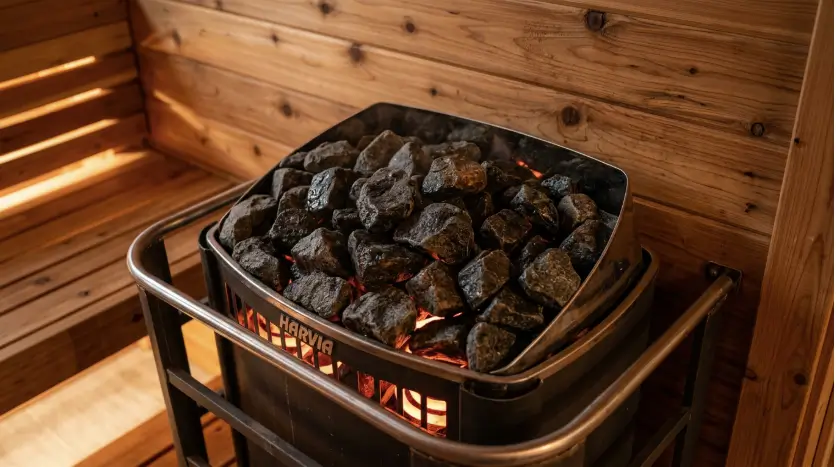
A sauna heater kept in good condition for a decade or more comes down to four habits: checking and replacing stones every 1 to 2 years, keeping the compartment and housing free of dust and debris, watching for early signs of element wear, and having the electrical connection inspected periodically. None of it takes much time individually, but skipping all of it for years at a stretch is the most common reason a heater that should last 12 to 15 years needs full replacement in half that time.
How Often Do the Stones Actually Need Attention?
Volcanic stones absorb enormous thermal stress every session, heating to several hundred degrees and then cooling repeatedly, and that cycling eventually causes them to crack, chip, and break down into smaller pieces and dust. A quick visual check every 6 to 12 months, looking for stones that have crumbled to gravel-size fragments or an unusually thin layer of stone dust at the bottom of the compartment, catches the problem early. Full replacement every 1 to 2 years for regular users, or up to 3 years for occasional use, keeps heat distribution even and steam quality consistent, since a bed of half-crumbled stones holds less heat and produces thinner steam than a full, intact load.
What Does Routine Cleaning Actually Involve?
With the heater fully cooled and, ideally, unplugged, wipe the exterior housing and guard rail with a dry or barely damp cloth to remove dust and any mineral residue from water ladled onto the stones. Never spray water directly at the control panel or the heating elements themselves, since moisture intrusion into electrical components is one of the more common causes of premature failure. A small handheld vacuum with a narrow attachment works well for clearing dust and small stone fragments from the bottom of the compartment every few months, done carefully around the elements rather than pressing the nozzle directly against them.
What Early Signs Point to Failing Elements?
A heater that used to reach temperature in 30 minutes and now takes 50 or 60 is one of the clearest signs an element is losing efficiency, often well before it fails outright. Uneven heat, with one side of the stone bed noticeably cooler than the other, points to a single failed or failing element in a multi-element unit rather than a wholesale problem. A heater that trips the breaker on startup, especially if it did not do this when new, usually indicates a short or a failing element drawing excess current, and this is a situation to have inspected rather than reset repeatedly and ignore.
How Does Wood-Fired Maintenance Differ?
Wood-fired heaters carry a longer maintenance list than electric units. The chimney needs sweeping at least once a season to clear creosote buildup, which is both a fire risk and a drag on draft efficiency if left unaddressed. Ash should be cleared from the firebox regularly, generally after every few uses, and the door gasket checked yearly for wear, since a poor seal lets excess air in and makes the fire harder to control. The firebox grate itself, which takes direct flame contact, typically needs replacement every several years depending on how often the heater runs, well before most of the rest of the unit shows wear.
Should the Electrical Connection Be Checked Periodically?
Yes, and this is the maintenance item most beginners skip entirely. Having a licensed electrician inspect the dedicated circuit, breaker, and wiring connections every 2 to 3 years for a regularly used heater catches loose connections or insulation wear before they become a real hazard. Warning signs that warrant an earlier check include a breaker that trips without an obvious cause, a burning smell near the panel or the heater itself, or a control panel that flickers or resets unexpectedly during a session. Buyers looking to compare heater models with published stone capacity and element specs before their next purchase can check sweatdecks.com alongside other specialty retailers to see how documented maintenance intervals vary between brands.
Does Regular Maintenance Affect the Sauna Experience Itself?
A well-maintained heater with fresh stones and clean, unobstructed elements reaches and holds the 170 to 190 degree range that most of the sauna bathing research describes more reliably than a neglected one running on crumbled stones and a struggling element. Research summarized in Evidence-Based Complementary and Alternative Medicine has tied regular sauna sessions at consistent target temperatures to a range of positive associations, and a 2018 review in the American Journal of Physiology covering heat exposure noted similar patterns tied to consistent, repeatable sessions. These remain association findings rather than proof of causation, but a heater that performs consistently session after session is closer to the conditions those studies actually describe than one drifting further from spec each year.
What Does a Simple Seasonal Checklist Look Like?
A short recurring routine keeps most heaters trouble-free without turning maintenance into a chore. Each spring and fall, check the stone bed for crumbling or excessive dust, wipe down the housing and guard rail, and confirm the timer and shutoff settings still respond correctly during a normal cycle. Once a year, pull the heater’s cover if the manual allows it and check for dust buildup around the elements, since accumulated dust can act as an insulator and make elements run hotter than intended to reach the same target temperature. Wood-fired owners should add a chimney inspection to this same seasonal rhythm rather than waiting until a problem shows up mid-winter.
See also: How Typography Helps Build Trust in Digital Products
When Does a Maintenance Issue Call for a Professional?
Cleaning, stone checks, and visual inspection are reasonable DIY tasks for most owners. Anything involving the wiring, the control board, or a heater that trips a breaker, sparks, or produces a burning smell should go to a licensed electrician or the manufacturer’s service line rather than being opened up and poked at without training. Attempting an electrical repair on a 240-volt sauna circuit without the right background is a real safety risk, and it can also void whatever warranty coverage remains on the unit.
Frequently Asked Questions
How often should sauna heater stones be replaced?
Check every 6 to 12 months and plan on full replacement every 1 to 2 years for regular use, since heat cycling causes stones to crack and crumble over time.
How do I clean a sauna heater without damaging it?
Wipe the cooled exterior with a dry or barely damp cloth, never spray water at the elements or controls, and vacuum stone dust from the compartment periodically with the unit unplugged.
What are signs a sauna heater’s elements are failing?
Longer heat-up times, uneven heat with cold spots, or a heater tripping the breaker on startup are common signs that usually call for professional inspection.
Does a wood-fired sauna heater need different maintenance than electric?
Yes, it needs a seasonal chimney sweep, regular ash removal, and periodic checks of the firebox grate and door gasket, none of which apply to an electric unit.
How often should the electrical connection be inspected?
Roughly every 2 to 3 years for regular use, sooner if there is an unexplained tripped breaker, a burning smell, or a flickering control panel.
References
- Clinical Effects of Regular Dry Sauna Bathing: A Systematic Review, Evidence-Based Complementary and Alternative Medicine, 2018
- Effects of heat and cold on health, with special reference to Finnish sauna bathing, American Journal of Physiology, 2018
- Does the Combination of Finnish Sauna Bathing and Other Lifestyle Factors Confer Additional Health Benefits? A Review of the Evidence, Mayo Clinic Proceedings, 2023
By Greg Halloran
